How a robust schedule comes about: activities and dependencies, durations from the building model and control during construction, using a shell construction as the example.
1Scheduling
We structure the project into activities, link them through technological and organisational dependencies and determine the critical path. The result is a schedule that makes sequence, durations and float transparent, from the master schedule for project development to the detailed schedule for the site.
Feb 2026JulOctJan 2027AprJulOct
Site overheads (standby)
Site setup3 activities
BE aufbauen25/02/26 - 05/03/26
TDK aufstellen05/03/26 - 11/03/26
Vermessung Absteckung11/03/26 - 13/03/26
Earthworks5 activities
Oberbodenabtrag13/03/26 - 16/03/26
Baugrubenaushub16/03/26 - 19/03/26
Böschungsherstellung19/03/26 - 23/03/26
Planum + Kiesschüttung23/03/26 - 25/03/26
Wasserhaltung16/03/26 - 06/04/26
Foundation / base slab7 activities
Magerbeton25/03/26 - 26/03/26
Randschalung BP26/03/26 - 30/03/26
PE-Folie / Abdichtung30/03/26 - 31/03/26
Bewehrung Bodenplatte31/03/26 - 10/04/26
Beton Bodenplatte10/04/26 - 14/04/26
BP Nachbehandlung + Ausschalen Randschal.14/04/26 - 16/04/26
Rohbau-Reinigung und Entsorgung Bauschutt07/10/27 - 11/10/27
TDK abbauen11/10/27 - 14/10/27
BE abbauen14/10/27 - 19/10/27
critical path with float standby period (overheads)Expand a group to see its individual activities (original German names). On narrow screens, swipe sideways.
Fig. 1 Schedule of a shell construction in activity groups with the critical path highlighted. The groups can be expanded.Source: rheonda, example project
2Model-based foundations
Robust durations start with quantities. We read them from the building model, price them with productivity rates from the estimate and derive durations and resource demand.
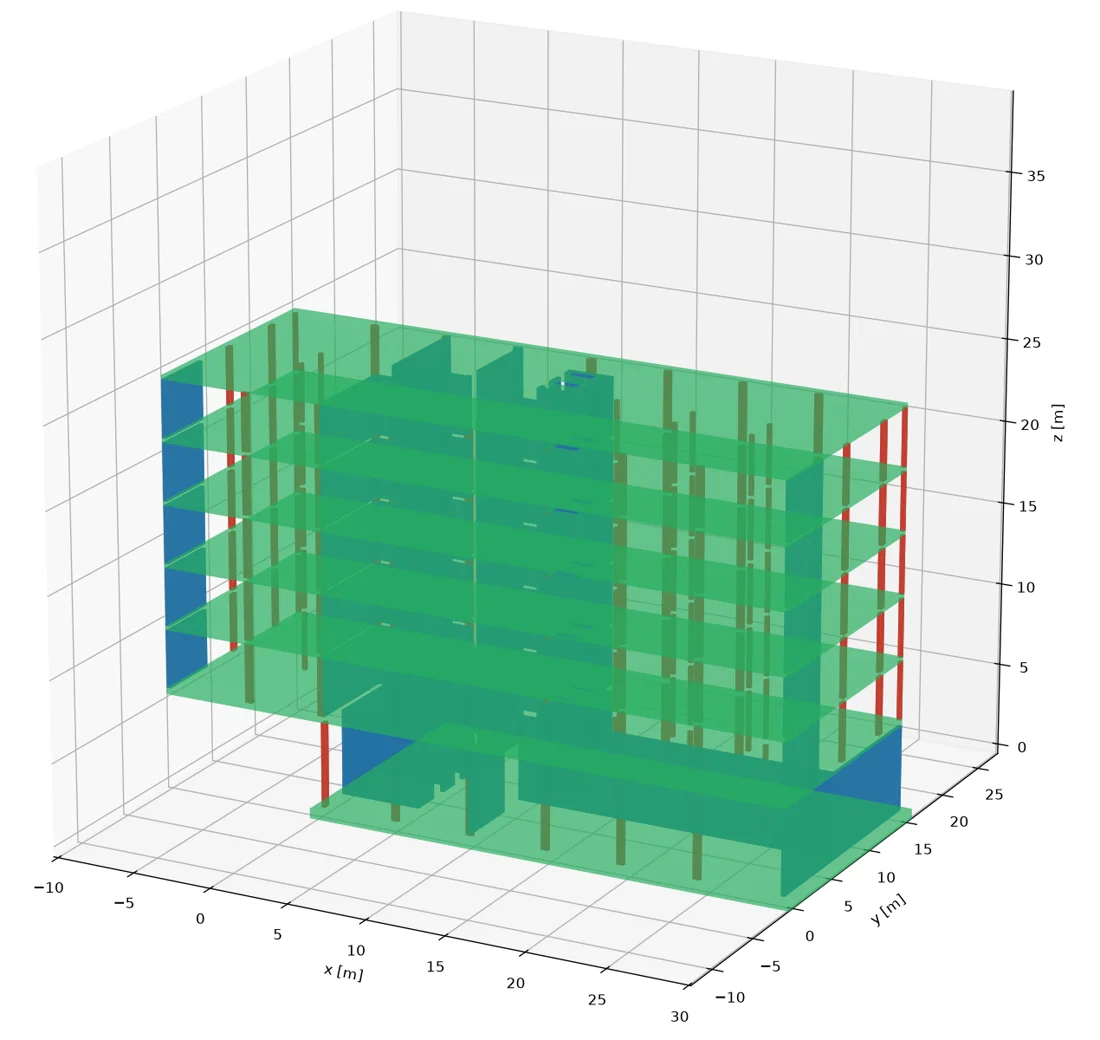
The model’s element structure (foundation, walls, columns, slabs) is also the bridge to 4D simulation: the same model that supplies the quantities later visualises the construction sequence.
Fig. 2 Element geometry of a shell construction read from the IFC model.Source: rheonda
3Schedule control during construction
01
Plan-actual comparison
Record progress regularly and compare it with the schedule.
02
Updating
Adapt the schedule to the actual course and show the effect on completion.
03
Countermeasures
Develop measures to secure the schedule and assess them for cost and quality.
04
Reporting
Present the schedule status clearly for clients, project management and subcontractors.